For the past two years, enterprise AI conversations have largely revolved around prompts. Teams experimented with instruction patterns, templates, and frameworks to improve outputs from large language models. In many cases, a better prompt meant better results.
But as organizations move from experimentation to operational AI adoption, a larger realization is emerging:
The challenge is no longer just writing better prompts. It is building the right system around them.
Across enterprises, the conversation is shifting from:
“How do we prompt AI effectively?”
to:
“How do we give AI the right context, memory, data, and operational structure to perform reliably at scale?”
That shift is redefining how enterprise AI systems are being designed.

The Early Era of Prompt Engineering
When generative AI adoption accelerated, prompt engineering quickly became a critical skill. Teams discovered that small instruction changes could significantly influence output quality. Organizations built prompt libraries, internal playbooks, and reusable templates to standardize usage across teams. For lightweight use cases, this worked well.
However, enterprise environments introduced a different level of complexity. AI systems were no longer limited to single chat interactions. They became connected to workflows, enterprise knowledge, retrieval systems, and increasingly agentic processes. At that point, prompts alone stopped being enough.
Why Prompting Alone Does Not Scale
As AI systems grow more operational, the surrounding context becomes just as important as the instruction itself.
A prompt may work perfectly in testing but fail in production because:
- The retrieved information is incomplete
- The system loses relevant context
- Memory becomes noisy
- Workflows evolve over time
This is why many enterprises are discovering that output quality depends less on “prompt tricks” and more on how effectively context is managed.The industry is gradually moving from prompt-centric AI toward context-centric AI systems.
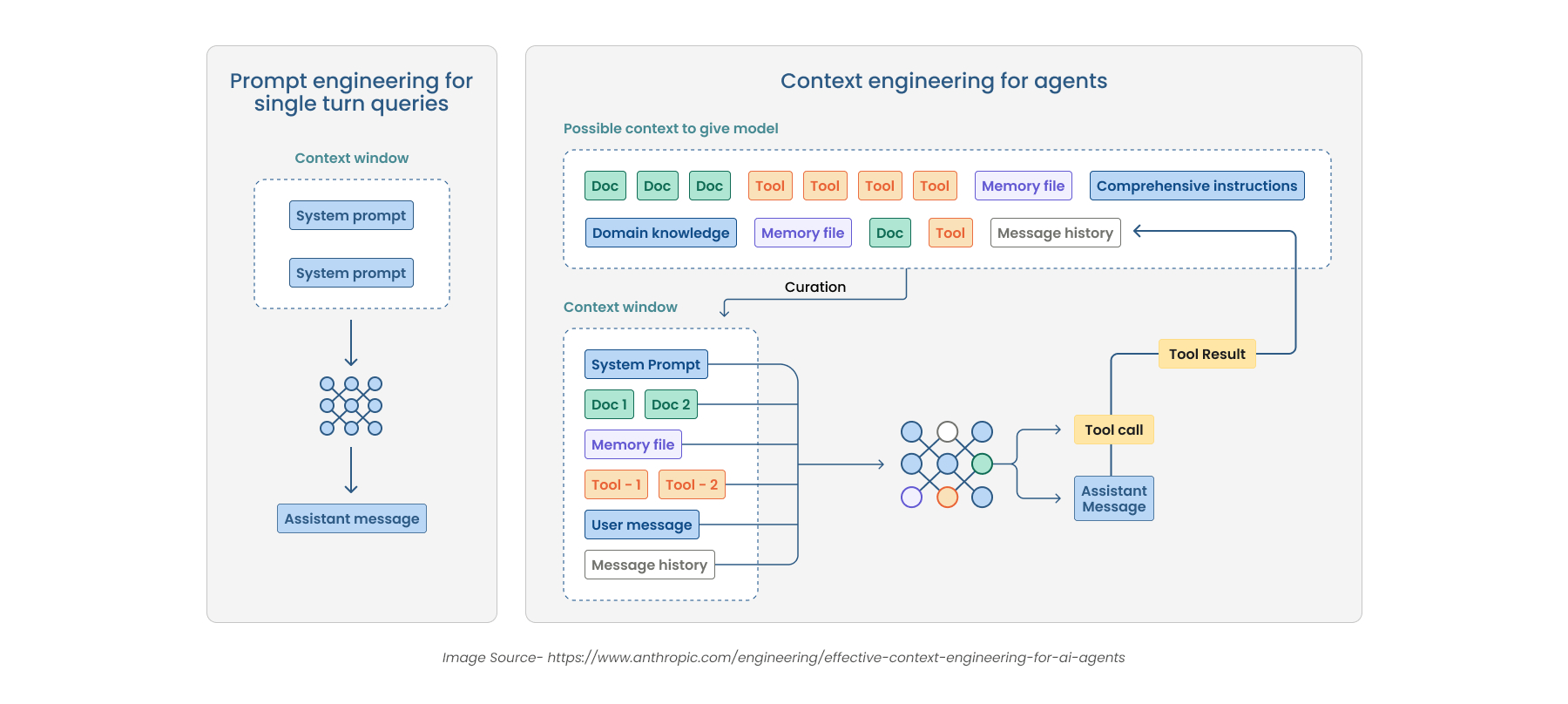
The Rise of Context Engineering
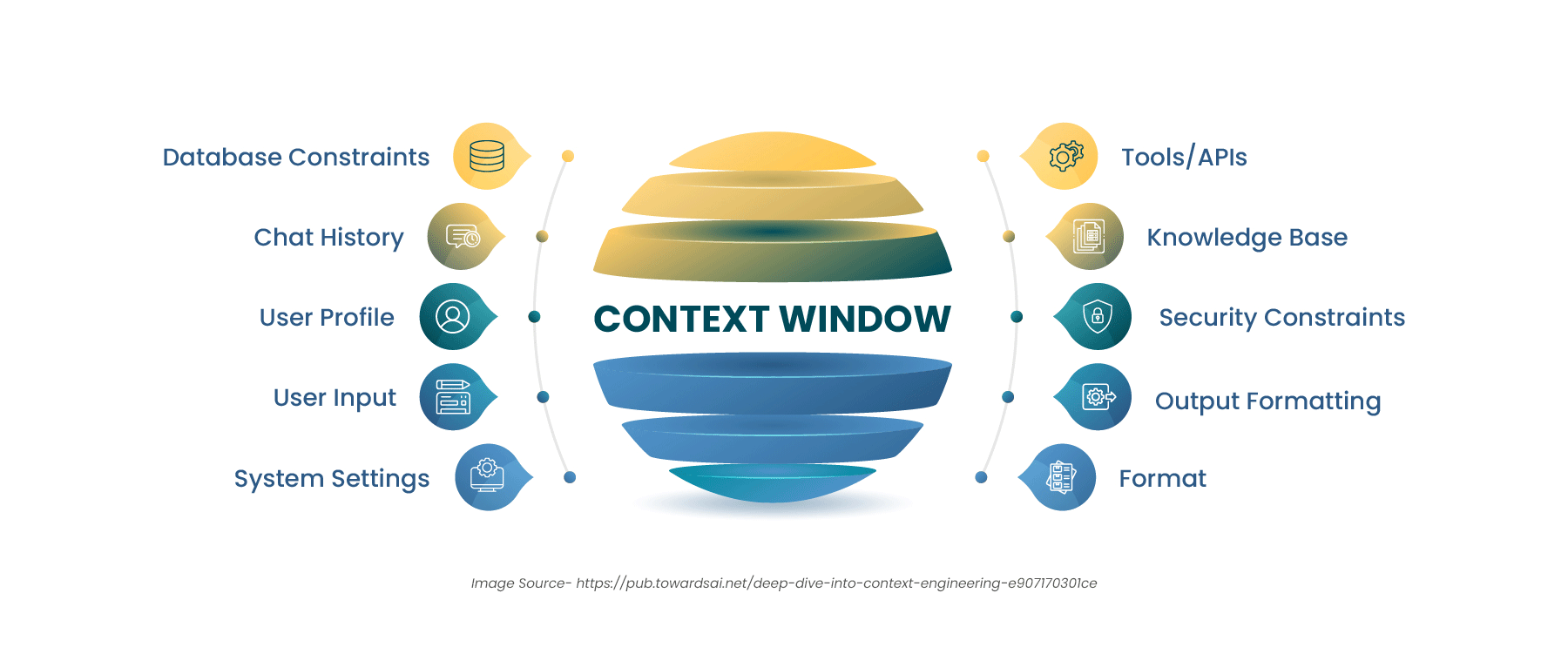
Context engineering is emerging as the discipline of designing the informational environment around AI systems. Instead of focusing only on instructions, context engineering focuses on what information the AI can access, how knowledge is retrieved, what the system remembers, and how workflows are dynamically structured during execution.
In enterprise environments, this may include enterprise documents, workflow history, governance rules, tool outputs, memory layers, and operational metadata. The goal is not simply improving one response. The goal is to improve reliability across repeated enterprise usage. This shift is becoming especially important in agentic AI systems where models interact with tools, retrieve data, and execute multi-step workflows.
From AI Conversations to AI Operating Systems
One of the biggest shifts happening in enterprise AI today is the movement from isolated AI interactions toward reusable AI operating layers. Organizations are increasingly building systems for prompt management, retrieval orchestration, memory handling, governance, and workflow observability. This changes how enterprises scale AI adoption.
Instead of employees repeatedly recreating prompts manually, organizations are beginning to operationalize domain expertise, workflow standards, organizational knowledge, and reasoning structures into reusable systems.
The result is greater consistency, stronger governance, and more scalable AI execution. In many ways, enterprises are no longer just interacting with AI systems; they are engineering environments around them.
Why This Matters for Business
The transition from prompt-centric AI to context-centric systems is not just a technical evolution. It has direct business and operational implications.
As AI becomes embedded into enterprise workflows, organizations increasingly need systems that are reliable, governed, and scalable. A model producing a strong response occasionally is no longer enough. Enterprises need AI systems that can consistently operate across teams, workflows, and business functions.
Organizations that build stronger AI context layers may achieve:
- More reliable outputs
- Faster workflow execution
- Reduced manual intervention
- Better operational consistency
For example, an enterprise support assistant relying only on static prompts may generate inconsistent responses across customer interactions. But when connected to retrieval systems, workflow memory, governance rules, and enterprise context, the same system can provide significantly more accurate and context-aware outputs.
This is why many enterprises are shifting their focus from isolated prompting techniques toward broader AI operating frameworks.
Why This Matters for Agentic AI
The shift becomes even more important as enterprises adopt agentic AI systems.
Unlike traditional chat-based AI, agentic systems retrieve information, interact with tools, maintain memory, and execute multi-step processes. In these environments, system behavior is heavily influenced by context quality.
An AI agent may fail not because the prompt was weak, but because the wrong information was retrieved, the context became overloaded, or relevant memory was unavailable. This is why enterprise AI discussions are increasingly centered around retrieval quality, memory architecture, orchestration, and context relevance.
Conclusion
Prompt engineering was an important first phase of enterprise AI adoption. It helped organizations understand how instruction design influences AI behavior and unlocked significant productivity gains.
But enterprise AI is now moving into a more operational phase. As organizations adopt agentic workflows and reusable AI capabilities, the challenge is no longer simply writing better prompts. The larger challenge is designing reliable AI systems where prompts, context, retrieval, memory, and governance work together as part of a broader execution environment.
The organizations that succeed in the next phase of enterprise AI adoption are unlikely to be the ones with only the best prompts. They will more likely be the ones who build the strongest systems around them.
Insights That Drive Impact
Healthcare is evolving faster than ever — and those who adapt are the ones who will lead the change.
Stay ahead of the curve with our in-depth insights, expert perspectives, and a strategic lens on what’s next for the industry.